

PEOPLE / TALENT
Departures Don’t Create Weakness –They Reveal It


A question to consider:
When someone important leaves your organization, what will you and your team remember most about how the transition was handled?
Most leadership teams spend a great deal of time thinking about how to bring people into an organization. We develop job descriptions, interview candidates, create onboarding plans, and think carefully about how to set someone up for success.
We often give far less attention to how people leave, yet departures are an important part of organizational life. People retire. They pursue new opportunities. Their goals change. Sometimes the organization changes. Even when a departure is positive, it can create uncertainty, sadness, disruption, and a long list of practical questions.
Strong leadership teams do not avoid those realities. They help people leave well.
Leaving well
Leaving well means creating enough time (if possible) and structure to transfer important knowledge, relationships, responsibilities, and unfinished work. It means being clear about what is changing, what is not changing, and who will be responsible moving forward. It also means acknowledging the human side of the transition.
I write this as our team is experiencing this first-hand. Matthew has made such a meaningful contribution to Compass Point, to our clients, and especially to our team. We are grateful for the experience, perspective, humor, and care he brought to his work. We can be sad to see him go (and we are!), celebrate what he contributed, and still be confident about the next chapter. Those things can all be true at the same time.
The departing employee also has a responsibility. Leaving well means finishing with the same professionalism and care that helped build trust in the first place. It means documenting what others need to know, preparing colleagues to take over, and resisting the temptation to mentally leave before the final day arrives. And Matthew did that for us.
Transitions are a test of organizational health.
If knowledge lives only in one person’s head, relationships belong only to one employee, or key decisions stop when someone leaves, the departure did not create the vulnerability. It revealed it.
A few questions for your leadership team:
• Are roles, processes, and key relationships documented well enough to survive a departure?
• How do you communicate transitions without creating unnecessary uncertainty?
• Do you give people the opportunity to finish, contribute, and say goodbye well?
• What could you do now to make the next transition less disruptive?
People will not stay forever.
But the way they leave – and the way we help them leave – can strengthen trust, preserve relationships, and prepare the organization for what comes next.

You may also like…
BLOG | FAMILY DYNAMICS / GOVERNANCE
A Strong Family Business Isn’t Perfect
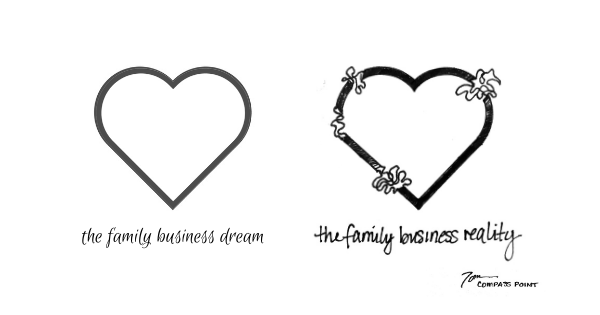
Running a family business is a lot like any other business. There are sales goals to meet, market trends to monitor, supply chains to navigate, stakeholders’ expectations to manage and people to hire, fire and develop. Pretty much the same… UNTIL you add FAMILY. And then, there are family dynamics to consider as you chart your business's course and build a strong family business.
Read More
BLOG | LEADERSHIP
Are you tolerating toxic productivity?
Toxic productivity. Is this a new term to you? Or did the phrase make you cringe because you KNOW it exists in your organization? While it sounds like an oxymoron, it is more prevalent than most business leaders care to admit. Toxic productivity comes from employees who are a constant source of drama...
Read More
BLOG | PEOPLE / TALENT
How to Coach (or deal with) a Negative Employee
As a leader, it is more likely that you’ll manage a negative employee or situation than not. Whether it is a short-lived instance or a long term issue, it can be manageable with candid conversations. Here are a few steps that work well to address and remedy the situation: Unearth the problem...
Read MoreWhere Family Businesses Come to Grow & Learn
At Compass Point, we make it easy to get insights, training, tools, and articles straight to your inbox and help family business owners and their team continue to grow, learn, and lead.